Travel Insurance for Senior Travelers: What to Look For
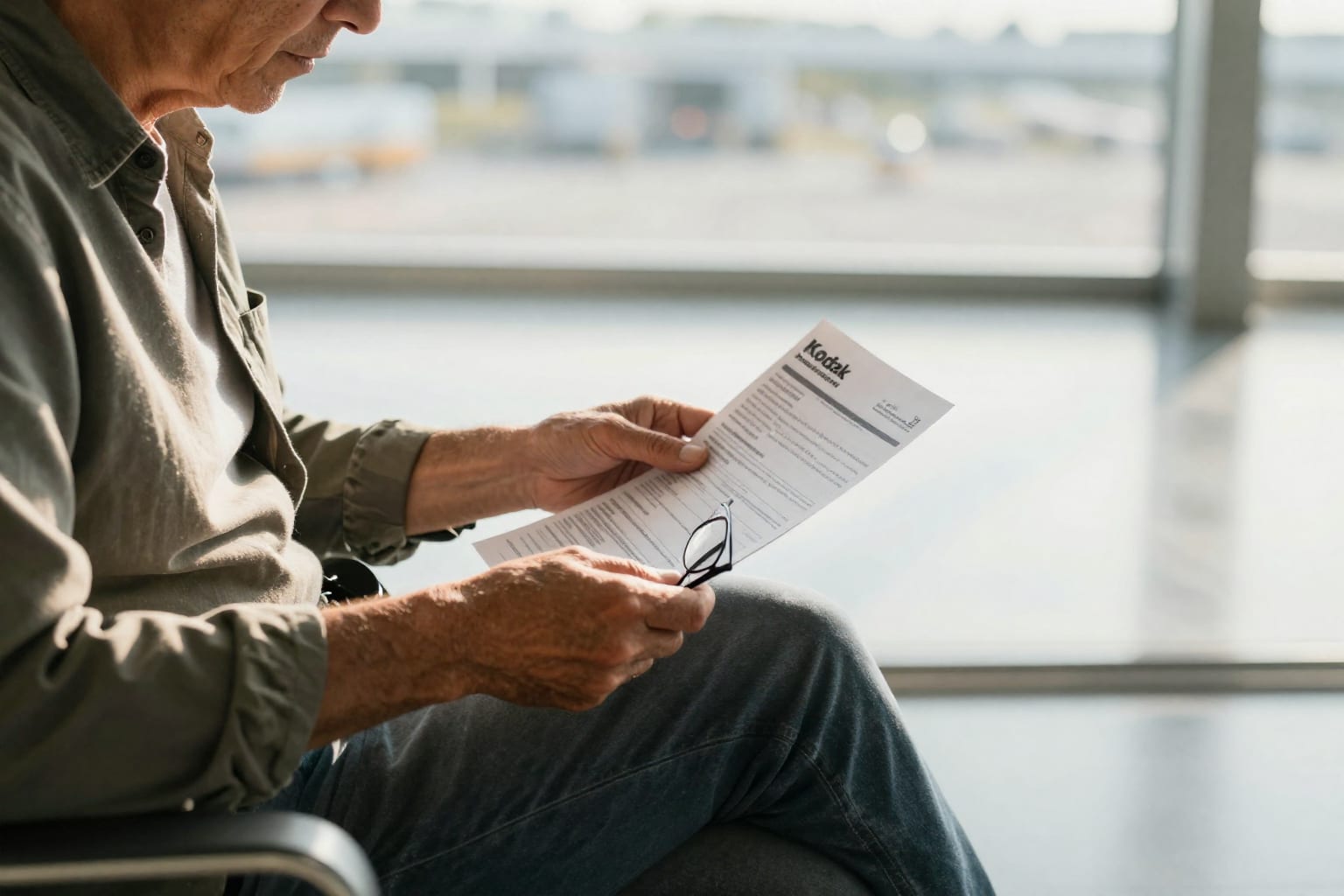
I watched my 72-year-old father strain to read a travel insurance policy online two weeks before a trip to Portugal, not understanding whether his arthritis medication was covered. Three days after he landed in Lisbon, he slipped in his apartment building and needed an urgent imaging scan. His regular health plan wouldn't touch international care, and he was out $2,400 — money we could have protected for less than the cost of a fancy dinner back home. That moment stuck with me, and it's why I eventually became obsessed with understanding what makes a travel insurance policy actually work for older adults.
Why Senior Travelers Face Unique Insurance Risks
Senior travelers aren't just older versions of 35-year-old backpackers. They're more likely to be managing chronic conditions, taking multiple medications, and traveling with specific health needs. A standard "travel insurance" policy — often designed for young, healthy adventurers — typically covers accidents and unexpected events but leaves huge gaps for anything remotely predictable. That's the blind spot.
Consider altitude sickness, or arthritis flare-ups triggered by travel, or a urinary tract infection that needs antibiotics abroad. These aren't rare emergencies — they're routine inconveniences for people over 65. Yet many budget policies exclude treatment for pre-existing conditions or won't cover "chronic" issues at all. An older traveler can find themselves in a foreign pharmacy trying to explain to a local doctor whether their condition qualifies as covered or excluded.
The other overlooked risk is the cost of medical care itself. A single night in a private hospital in Australia, Spain, or Thailand can cost $3,000–$8,000. A medical evacuation flight home — whether by plane or helicopter — can cost $15,000–$50,000. These numbers dwarf the price of an annual travel insurance policy, yet many seniors skip insurance because it feels like an unnecessary extra cost.
Medical Coverage: The Foundation of Senior Travel Insurance
When you're researching travel insurance for someone 65 or older, medical coverage is the core of everything. The basic question is simple: if you need urgent medical care abroad, what does the policy actually pay for, and up to how much?
Most senior-focused policies offer medical coverage ranging from $50,000 to $500,000. The ceiling matters more than you'd think. The minimum I'd recommend is $100,000 — enough to cover a serious illness or injury without bankrupting your family. If you're traveling to expensive destinations like Australia, western Europe, or parts of the Middle East, aim for $250,000 or higher. When I was helping my mother plan a trip to Switzerland, a local hospital stay would have cost roughly $1,500 per day. A 5-day stay plus imaging and specialists could easily hit $10,000–$15,000. Her $100,000 cap felt reasonable for a two-week trip.
Emergency evacuation and repatriation are separate line items on most policies. Evacuation means getting you from a remote area to the nearest adequate medical facility. Repatriation means flying you home for ongoing care. A helicopter evacuation in the Canadian Rockies might be $20,000. A medical repatriation flight from Southeast Asia could be $30,000. Your base medical coverage won't cover these costs — you need explicit evacuation and repatriation limits. I recommend a minimum of $250,000 for both combined, especially if you're hiking, trekking, or traveling in remote areas.
Navigating Pre-Existing Conditions and Exclusions
Pre-existing conditions are where most seniors hit a wall. Nearly every travel insurance policy excludes treatment for conditions that existed before you bought the policy. If you have hypertension, diabetes, heart disease, or arthritis — conditions that are incredibly common in people over 65 — your "standard" policy won't touch any related care abroad.
Here's where I learned the most: when I started researching senior travel insurance seriously, I realized I'd been doing it wrong. I'd assumed any travel insurance was basically the same and focused only on price. The real eye-opener came when my mother asked a simple question: "What happens if I get food poisoning in Bangkok and need to come home early?" I started calling insurers and reading actual policy documents — not just the summaries. I created a spreadsheet with columns for maximum payouts, exclusions, pre-existing condition wording, and claim processing times. I spent two full afternoons comparing policies, and by the end, I realized that a $25-per-day policy that excluded her stable blood pressure medication was actually more expensive per dollar of actual protection than a $50-per-day policy with real depth. The difference wasn't about the daily cost — it was about what you could actually use.
The key to navigating this is honesty and specificity. When you buy a policy, you're asked to disclose your medical conditions. Disclose everything, even the conditions you think are irrelevant. Many insurers have a "waiver of pre-existing condition" clause — essentially, they agree to cover your existing conditions under certain circumstances. Some require that you buy the policy within 14–30 days of your trip's initial booking. Others require that your condition be stable and unchanged for 90 days before travel. Others have no such waiver at all. You need to find an insurer whose terms match your actual situation.
Coverage Limits, Deductibles, and Add-Ons That Matter
Here's a real scenario that illustrates why policy details matter: A friend of mine was traveling in Spain in 2024 and developed sudden severe gastritis. The emergency room visit, three nights in a private hospital, diagnostic imaging, and a flight home on medical advice came to $18,500 out of pocket. She had purchased a mid-tier travel insurance policy specifically recommended for older travelers. The policy had a $30,000 maximum medical coverage cap, a $500 deductible, and included emergency medical evacuation up to $250,000. She was completely covered because she'd spent the extra $180 on her total trip cost to upgrade to that higher tier. Without that coverage, she would have tapped her retirement savings or asked her adult children for help.
This story touches on something most seniors get wrong: they choose "good enough" coverage over coverage designed for them. A $40-per-day policy feels like a bargain until you're facing a $50,000 evacuation from Thailand or a $15,000 hospital stay in Australia. The real decision isn't between cheap and expensive — it's between a policy designed for your life and one designed for someone in their 30s with perfect health. That seems like an obvious point, but it changes how you shop. Instead of picking the lowest-cost option, you're asking: "Does this policy actually protect me, specifically?"
Deductibles typically range from $250 to $1,000. A higher deductible lowers your premium but means you pay more out of pocket if you file a claim. For seniors, I lean toward lower deductibles ($250–$500) because the probability of needing care is higher, and you want to avoid big surprise bills. Add-ons like coverage for adventure sports, extreme hiking, or pregnancy rarely apply to older travelers, but coverage for trip cancellation, baggage loss, and dental emergency often makes sense. Trip cancellation is worth the cost if you're paying for an expensive journey or traveling during flu season.
Five Questions Every Senior Should Ask Before Buying
Before clicking "buy" on any travel insurance policy, ask the insurer or broker these five questions:
- "Are my specific pre-existing conditions covered, and under what conditions?" Don't settle for vague language. Ask which of your medications and diagnoses are covered, whether there's a waiting period, and whether you need to purchase the policy within a certain timeframe of booking your trip.
- "What's the maximum I can claim for emergency medical care and evacuation combined?" Get a clear dollar number. If the policy splits medical and evacuation limits, ask for both and add them up mentally.
- "If I need to file a claim, how long does approval typically take, and what documents do I need to provide?" You want to know if you'll be stuck paying out of pocket and reimbursed later, or if the insurer can pay the provider directly.
- "Are there any destinations, activities, or age-related exclusions I should know about?" Some insurers exclude coverage for travelers over 75 in high-risk regions or won't cover winter sports even as a casual skier.
- "Can I extend my coverage if I decide to stay longer, and what's the process?" Travel plans change. Know whether you can add days or weeks and how much it costs.
A Real Example: When Coverage Actually Saved the Day
A concrete example makes this tangible. In early 2024, a 68-year-old retired teacher was traveling with her husband through Portugal and Greece. On day 8 of a 14-day trip, she fell getting off a tour bus and fractured her ankle. The local Greek hospital took her for X-rays ($400), confirmed the fracture ($200), and recommended she fly home for surgical evaluation rather than undergo surgery locally. The medical flight alone cost $8,200. Once home, she had a follow-up orthopedic appointment ($500) and eventually a minor surgical repair ($3,800). Total: $13,100.
She had purchased a standard travel insurance policy 10 days before departure because her son urged her to. The policy cost $65 for two weeks and included medical coverage up to $100,000, emergency evacuation up to $250,000, and a $500 deductible. The claim was approved within 72 hours of submission. She paid $500 out of pocket (the deductible) and submitted receipts. The insurance company reimbursed her $12,600. Without that policy, she would have absorbed nearly $13,000 in unexpected costs, or delayed necessary surgery to manage pain at home. Instead, she recovered fully and spent the difference on a return trip the following year.
This isn't a fairy tale. It's a common outcome when coverage is designed for your actual needs. The policy wasn't the cheapest option available — she probably could have found a $20-per-week policy online — but it was designed for travelers her age with realistic medical risk. That made all the difference when she actually needed it.
Before you book your next trip, spend an hour reviewing what travel insurance is available to you. Compare three options, call the insurers if anything is unclear, and ask those five questions. The $50–$100 you spend on the right policy is the cheapest insurance you'll ever buy. And unlike some kinds of insurance, you might actually use it.